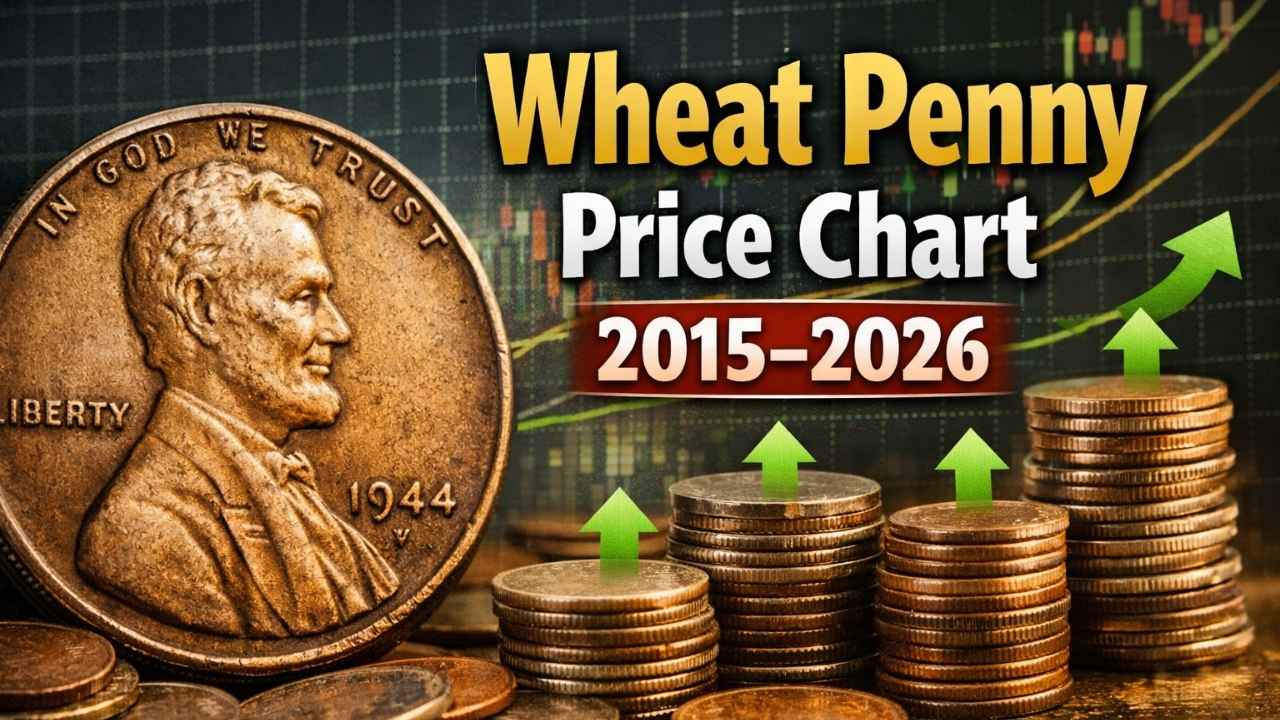
Wheat Penny Price Chart 2015–2026: The Wheat Penny, officially known as the Lincoln Wheat Cent, remains one of the most widely collected American coins in modern numismatics. Minted from 1909 to 1958 and designed by Victor David Brenner, the coin features President Abraham Lincoln on the obverse and two stylized wheat stalks on the reverse.
Between 2015 and 2026, Wheat Penny values have experienced steady growth, driven by rising interest in coin collecting, precious metal fluctuations, and increased demand for key-date examples. This guide breaks down pricing trends, rarity tiers, and collector insights across the past decade.

Key Highlights (2015–2026 Market Overview)
The Wheat Penny market has shown the following notable developments:
- Steady appreciation in high-grade certified coins
- Strong demand for key dates and low-mintage issues
- Increased premiums for error coins
- Growth in online auction participation
- Rising copper value influencing common-date prices
- Expanded grading submissions to services like Professional Coin Grading Service and Numismatic Guaranty Company
Overall, collector-grade examples have outperformed bulk circulated coins.
Wheat Penny Price Chart (Average Market Values)
Below is a general retail value trend for common-date Wheat Pennies (non-key dates) in average circulated condition:
- 2015: $0.03 – $0.10
- 2016: $0.03 – $0.12
- 2017: $0.05 – $0.15
- 2018: $0.05 – $0.18
- 2019: $0.08 – $0.20
- 2020: $0.10 – $0.25
- 2021: $0.12 – $0.30
- 2022: $0.15 – $0.35
- 2023: $0.18 – $0.40
- 2024: $0.20 – $0.45
- 2025: $0.22 – $0.50
- 2026: $0.25 – $0.60
Uncirculated examples (MS60–MS65) typically range from:
- 2015: $5 – $15
- 2020: $8 – $25
- 2026: $12 – $40
Prices vary depending on mint mark and eye appeal.
Key Date Value Trends (2015–2026)
Certain Wheat Pennies have consistently outperformed the general market.

1909-S VDB
- 2015: $700 – $1,200 (VF–XF)
- 2020: $900 – $1,800
- 2026: $1,200 – $2,500
1914-D
- 2015: $250 – $600
- 2020: $400 – $900
- 2026: $700 – $1,400
1922 No D
- 2015: $500 – $1,000
- 2020: $700 – $1,500
- 2026: $1,000 – $2,200
1955 Doubled Die
- 2015: $1,000 – $1,800
- 2020: $1,500 – $2,500
- 2026: $2,000 – $3,500
High-grade certified examples can exceed these ranges significantly at auction.
Copper Value Impact (1944–1958 Issues)
Most Wheat Pennies minted from 1944 to 1958 contain 95 percent copper. As copper prices increased between 2016 and 2022, melt value occasionally approached or exceeded 3 cents per coin.

However, it is illegal to melt U.S. cents for metal value under federal regulations, so collector demand remains the primary driver of pricing.
Grading and Condition Premiums
Condition dramatically affects value. Price differences between grades can be substantial:
- Good (G4): Base collector pricing
- Fine (F12): 1.5x–2x Good pricing
- Extremely Fine (XF40): 2x–4x Fine pricing
- Mint State (MS63+): 5x–20x circulated pricing
Coins graded and encapsulated by Professional Coin Grading Service or Numismatic Guaranty Company typically command higher resale premiums.
Market Drivers (2015–2026)
Several factors influenced Wheat Penny prices over the past decade:
- Growth of online marketplaces and digital auctions
- Increased visibility through social media coin communities
- Inflation-driven interest in tangible assets
- Expansion of third-party grading participation
- Renewed interest in vintage American coinage
Younger collectors entering the hobby have helped sustain demand for affordable historic coins like Wheat Pennies.
Investment Outlook Beyond 2026
Looking ahead, the Wheat Penny market is expected to:
- Maintain steady growth for key dates
- Show moderate appreciation in high-grade certified examples
- Experience stable but limited growth for common circulated coins
- Continue benefiting from long-term collector demand
While not typically a high-yield investment vehicle, Wheat Pennies offer historical value, affordability, and steady appreciation potential over time.
Final Verdict
From 2015 to 2026, Wheat Penny values have demonstrated gradual but consistent upward movement, particularly for rare and high-grade specimens. Common dates remain accessible entry points for new collectors, while key dates continue to attract serious numismatic investment.
Whether assembling a complete date-and-mint set or targeting high-grade certified rarities, Wheat Pennies remain a cornerstone of American coin collecting and a dependable segment of the numismatic marketplace.